7 AI workflows every Service desk needs in 2025
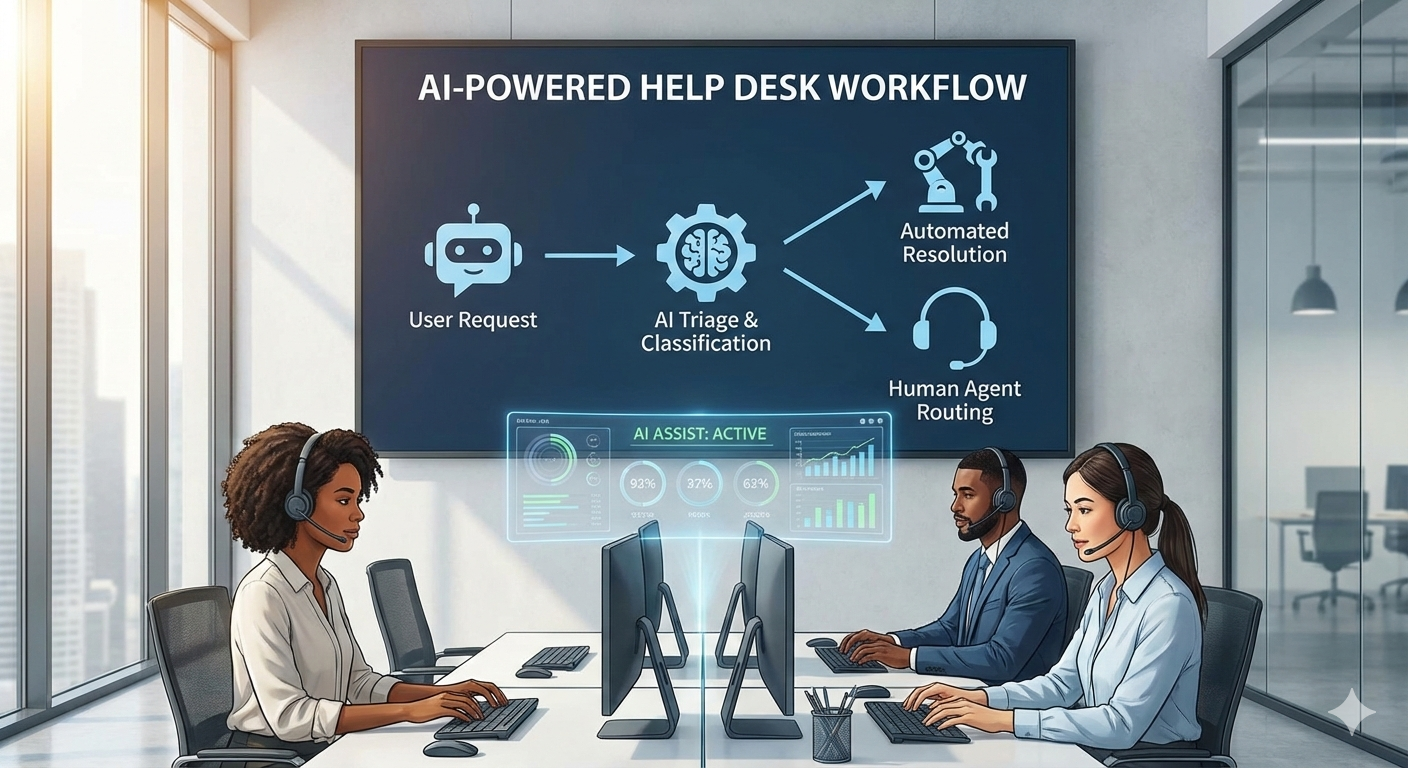
When we talk to IT teams, we hear the same story again.
Support teams are stretched thin. Hiring takes too long, costs a lot, and keeping good people is harder than ever. At the same time, ticket volume keeps growing. A lot of this work is repetitive, but it still takes up most of the team's day and keeps them stuck reacting instead of improving things. A recent study finds that IT teams spend 60-70% of their time on routine tasks, which limits their ability to handle complex issues.
Also IT environments get more complex. More remote workers, more devices, more networks, and less visibility into what's going on.
End user frustration spikes away when something breaks. They can't work. Waiting feels frustrating and slows down their work.
So that's why we need AI and automation to solve these challenges.
Traditional ITSM relies on forms, queues, and manual word. Traditional ticketing tools create more frustration because ticket responses are slow and ticketing is complicated. AI bridges this gap by automating routine tasks, improving the knowledge base, and understanding natural language.
Let's talk about the 7 AI workflows that every Service desk should implement to gain efficiency in 2025.
1. Self-Serve
IT technicians today spend large portions of their time on small repetitive tasks. The case for AI is strong because so much time and money is wasted. End Users often wait far too long for basic help. We've regularly seen users waiting for hours just to have someone check for device issues or install software.
That's where self-serve comes in. Imagine a salesperson can't load Salesforce before a client's call. Instead of user logging a vague "cant access salesforce" ticket, now they can go to self serve and AI can run a 10-second check for WiFi, app permissions, and recent device changes. Half the time the issue resolves during the diagnostic itself. The other half, you get a ticket with real context instead of guesswork. Users feel empowered because they fixed something themselves or at least arrived at a proper report.
2. Automated resolution
The rise of AI powers automated resolution. A large share of tickets are deterministic and policy-driven, which makes them perfect for safe automation with approvals and audit logs. Few examples of such cases are password reset, account unlock, software access and installation request.
3. Intelligent Triage
Ticket triage matters because support teams can prioritize and categorize incoming tickets efficiently so urgent issues are addressed quickly. With automated triage tickets in place, support teams can automatically tag, assign, and route tickets to the right agents or task agents. This not only improves response times but also frees up support agents to focus on more complex issues.
4. Ticket Copilot
Ticket copilot is there to make Support person's life easier. When a ticket opens, it pulls device and user details, recent changes to understand the issue quickly. It drafts clear replies and suggests the next best action to take. The chat summarizer turns long threads into a short brief with what happened, what was tried, and what to do next. It can turn fixes into ready-to-publish knowledge articles. With all these features new support agents learn faster, and experienced agents get more done.
5. Similar Ticket Analysis
Similar Ticket Analysis finds matches between new tickets and past cases. It shows the fix that worked in your IT environment, so the support desk can reuse it. If many similar tickets appear, it groups them, flags a possible incident, and recommends creating a parent problem. This reduces duplicate tickets and noise and makes support desk more efficient.
6. Knowledge Optimization
Traditional knowledge bases often become outdated. AI native ITSM addresses this by using AI to constantly update and improve knowledge bases automatically updating knowledge bases and making information accessible through conversational interfaces. When a support agent resolves a new issue, an AI system can document the solution, categorize it appropriately, and make it available for future reference. As it improves, it handles a bigger share of problems without human intervention.
7. Integration with Teams and Slack
Slack or Teams integration is the most intuitive way to get support because help appears inside the tools people use all day. AI can run diagnostics in the chat, suggest quick fixes, or create smart tickets when needed. The result is no more hunting for portals or filling long forms.
NetZen AI includes all seven workflows mentioned above. In addition, NetZen's Real Time Support helps shift support left by enabling end user self-service and providing assistance 24x7. Organizations benefit from reduced ticket volume, faster time to resolution, and a more efficient IT support.
Ready to implement these AI workflows in your service desk? Contact us to learn how NetZen AI can help transform your IT support operations.