AI Native vs AI powered Applications
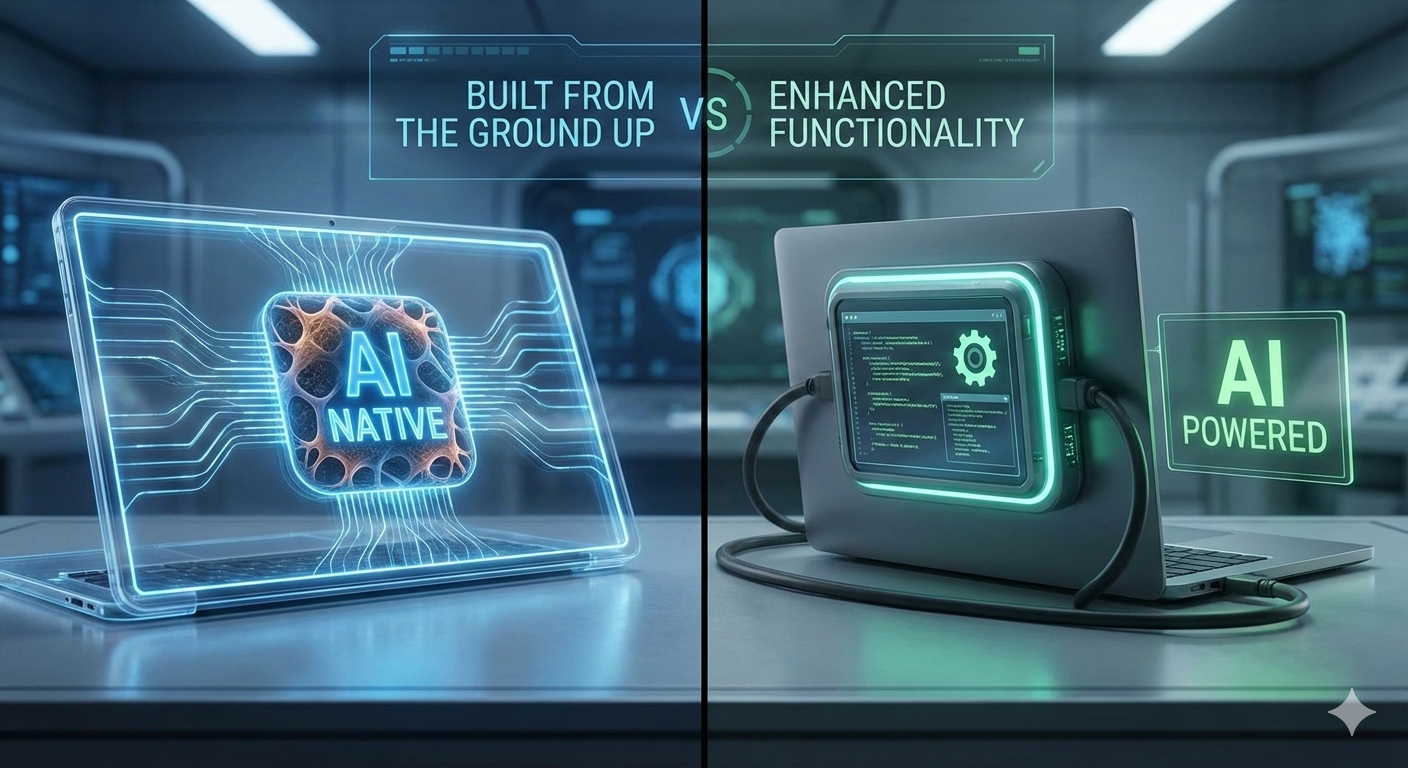
Two years ago, if someone told me I would be talking to a computer the way I talk to a coworker, I would not have believed them. Yet here we are, in the age of AI, where it has transformed the way, we work and is already making a big difference in all our lives. One of the most common topic that keeps coming up in the AI world is what makes a product AI native vs AI powered. So, let's dive into it today.
AI Native Means Reinvented from the Start
AI native means AI is the foundation, not an add on. It's about creating solutions that could only exist because AI exists. That is the difference between adding AI as a feature and rebuilding the product around it. AI native products often create experiences that did not exist before. Think of the difference between Photoshop adding generative AI as a premium upgrade versus Midjourney, which was designed entirely around generative AI from day one. With Adobe photoshop AI is bolted on and expensive while Midjourney is AI-native, cheaper, and more powerful for its use case.
Mobile Native Was the Blueprint
We saw this pattern during the mobile revolution. Early mobile first efforts often felt like a desktop product squeezed onto a smaller screen. Then mobile native companies came which designed around the phone from day one, so the experience felt effortless. Instagram and WhatsApp are classic examples of products that fit mobile perfectly because they were built for it. Meanwhile, legacy platforms like Facebook, LinkedIn had to redesign their application to get the native app experience.
ChatGPT Shows What Native Feels Like
Old chatbots trapped us in rigid menus. Press 1 for billing, Press 2 for Support. Do you remember that? ChatGPT felt different because you can speak naturally to it and even change your topic mid-way and it keeps track.
ChatGPT's general purpose use meant it can solve many tasks in one place instead of being limited to a single narrow function. There is almost no learning curve, which removes barrier for adoption and using it. As the models improve, user's experience keeps getting better without needing to relearn anything.
AI Powered ITSM Adds Steps, AI Native ITSM Removes Them
Most ITSM tools are still ticket first, with AI layered on as extra menu option. This results in creating more steps, more clicking, and more human dependent work. Task like triage, resolution notes, and knowledge base updates are still manual.
AI native ITSM changes this workflow and rebuilds the architecture around conversation, where every interaction becomes data and learning. Over time it gets smarter because every new resolution gets added to its training base resulting in auto resolution improving.
NetZen AI Closes the Loop in Real Support Work
NetZen AI is built to make conversation the interface and learning the default. It captures support chats across channels and turns them into automated triage, guided resolution, and a living knowledge base that updates itself. Teams can pull reports and insights by simply asking, without needing to export raw data or relying on a power user. The result is less tool management and more growth for both technicians and the IT business. That is the practical advantage of AI native, not more AI features, but fewer obstructions.
Ready to experience AI-native IT support? Contact us to learn how NetZen AI can transform your service desk operations.